

The Urgent Need for Agile Adoption in Nigeria: Transforming Project Management in 2026
Nigeria stands at a critical crossroads. As Africa’s largest economy navigates rapid technological transformation, evolving market demands, and increasing global competition, the traditional approaches to managing projects and delivering value are proving inadequate. The need for agile adoption in Nigeria has never been more urgent—and 2026 represents a pivotal year for organizations ready to embrace this transformation.
From Lagos’s bustling technology startups to Abuja’s government initiatives, from Port Harcourt’s oil and gas projects to nationwide fintech innovations, Nigerian organizations face a common challenge: how to deliver results faster, adapt to constant change, and compete effectively in an increasingly digital global economy. The answer lies not in working harder using outdated methods, but in fundamentally reimagining how we approach agile project management.
This comprehensive guide explores why agile methodology is no longer optional for Nigerian organizations, how frameworks like agile scrum transform project delivery, and why the need for agile adoption in 2026 represents both a challenge and an unprecedented opportunity for forward-thinking leaders.
Understanding Agile Project Management: Beyond the Buzzword
Before examining why Nigeria specifically needs agile adoption, let’s establish what agile project management actually means and why it differs fundamentally from traditional approaches.
What is Agile Methodology?
Agile methodology represents a philosophy and set of practices for managing work that emphasizes flexibility, collaboration, customer focus, and continuous improvement. Rather than attempting to plan everything upfront and execute according to a fixed plan (the traditional “waterfall” approach), agile methodology embraces change as inevitable and creates processes that allow teams to adapt quickly based on feedback and learning.
The agile approach originated in software development but has since proven valuable across industries—from construction and manufacturing to marketing, education, and government services. At its core, agile methodology is about delivering value incrementally, learning from each delivery, and continuously adjusting based on real-world feedback rather than assumptions.
The Agile Manifesto: Foundational Principles
The agile manifesto, created in 2001 by seventeen software developers frustrated with traditional project management’s limitations, established four core values:
Individuals and interactions over processes and tools Working solutions over comprehensive documentation Customer collaboration over contract negotiation Responding to change over following a plan
These values don’t suggest that processes, documentation, contracts, or plans lack importance. Rather, they assert that when forced to choose, we should prioritize the items on the left. This distinction becomes particularly relevant in Nigerian contexts where bureaucracy, excessive documentation, and rigid planning often impede actual progress.
The agile manifesto also articulates twelve principles including delivering working software frequently, welcoming changing requirements, maintaining sustainable work pace, and continuous attention to technical excellence. These principles provide practical guidance for implementing agile values in real organizational contexts.
What is Scrum? The Most Popular Agile Framework
When discussing agile methodology, many people specifically reference Scrum—the most widely adopted agile framework globally. What is scrum exactly? It’s a lightweight framework that helps teams work together to develop, deliver, and sustain complex products through iterative cycles called Sprints.
Agile scrum divides work into fixed-length iterations (typically 2-4 weeks) during which teams commit to delivering specific features or capabilities. Each Sprint includes planning, daily coordination, review with stakeholders, and team retrospective for continuous improvement. This rhythm creates predictability while maintaining flexibility to adjust priorities between Sprints based on learning and changing conditions.
Scrum defines three key roles: the Product Owner (representing customer and business needs), the Scrum Master (coaching the team and removing obstacles), and the Development Team (professionals doing the actual work). This clear role definition, combined with prescribed events and artifacts, makes agile scrum easier to implement than more general agile approaches while maintaining the flexibility that makes agile powerful.
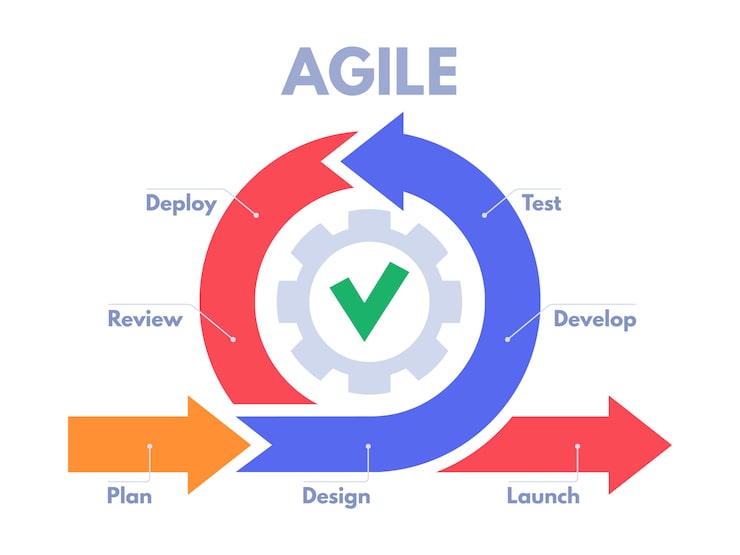
The Agile Model: How It Actually Works
The agile model operates on several key practices that distinguish it from traditional project management:
Iterative Development: Rather than building entire solutions before delivering anything, agile teams deliver working increments regularly. This allows early feedback and course correction before investing too heavily in wrong directions.
Continuous Planning: Instead of creating comprehensive plans upfront, agile embraces progressive elaboration—detailed planning for immediate work with high-level planning for future work. This acknowledges that we gain knowledge as projects progress and our plans should reflect that learning.
Self-Organizing Teams: Rather than managers assigning tasks, agile teams collectively determine how to accomplish their commitments. This increases ownership, leverages diverse team knowledge, and accelerates decision-making.
Empirical Process Control: Agile relies on transparency, inspection, and adaptation rather than predictive planning. Teams make decisions based on observable reality rather than speculation about the future.
Customer Collaboration: Continuous stakeholder involvement ensures teams build what’s actually needed rather than what was specified months ago based on incomplete understanding.
These practices create fundamentally different work environments than traditional command-and-control approaches still prevalent in many Nigerian organizations.
The Nigerian Context: Why Agile Adoption Matters Now
Understanding agile methodology is one thing; recognizing why it specifically matters for Nigeria in 2026 is another. Several converging factors make the need for agile adoption in Nigeria particularly urgent right now.
Rapid Technological Disruption
Nigeria’s digital transformation is accelerating at unprecedented pace. Fintech companies are reimagining financial services, healthtech startups are addressing healthcare access challenges, edtech platforms are transforming education delivery, and e-commerce is reshaping retail. This technological disruption creates constant change—exactly the environment where agile methodology thrives and traditional approaches struggle.
Organizations using waterfall project management find themselves spending months developing solutions that are obsolete before launch because market conditions changed, competitors introduced new offerings, or customer preferences evolved. In contrast, agile project teams deliver value incrementally, test assumptions quickly, and pivot based on real feedback rather than predictions.
Consider Nigeria’s mobile money revolution. Companies that adopted agile approaches could rapidly experiment with features, learn from user behavior, and iterate toward product-market fit. Those using traditional development cycles struggled to keep pace, often launching full-featured products that missed market needs because requirements gathered eighteen months earlier no longer reflected current reality.
Increasing Global Competition
Nigerian businesses no longer compete only with local rivals. Global technology companies enter Nigerian markets bringing international best practices, while Nigerian companies aspire to continental or global reach. This competition demands world-class project delivery capabilities.
Agile methodology is the global standard for technology development and increasingly for other project types. Organizations that master agile project management can compete on equal footing with international players. Those that don’t find themselves perpetually behind, unable to match the speed and quality of agile-enabled competitors.
The choice is stark: adopt agile practices and compete effectively, or maintain traditional approaches and gradually lose market position to more nimble competitors—whether they’re from Lagos, London, or Silicon Valley.
Resource Constraints and Economic Pressures
Nigerian organizations face persistent resource constraints—limited budgets, difficulty accessing skilled talent, infrastructure challenges, and economic volatility. These constraints make the waste inherent in traditional project management particularly painful.
Waterfall approaches often invest heavily in comprehensive planning, documentation, and development before delivering anything users can validate. When these efforts miss the mark (as they frequently do), the waste is substantial. Agile project management’s iterative approach minimizes waste by validating assumptions early and frequently, adjusting course before significant resources are consumed in wrong directions.
For Nigerian organizations where every naira counts, agile’s emphasis on delivering maximum value with minimum waste isn’t philosophical—it’s existential. The ability to start small, prove value, and scale based on demonstrated results makes agile methodology particularly well-suited to resource-constrained environments.
Talent Retention and Development
Nigeria faces significant brain drain as skilled professionals emigrate seeking opportunities abroad. Organizations that offer modern work environments using current methodologies like agile scrum have competitive advantages in attracting and retaining talent.
Young Nigerian professionals increasingly expect agile work environments. They’ve read about Sprint planning, daily standups, and retrospectives. They want to work in self-organizing teams solving meaningful problems rather than following rigid hierarchies executing predetermined plans. Organizations stuck in traditional project management approaches struggle to attract top talent who seek dynamic, empowering work environments.
Additionally, agile practices accelerate professional development. The continuous learning, regular feedback, and collaborative problem-solving inherent in agile methodology develop capabilities faster than traditional approaches where junior team members simply execute tasks assigned by senior managers.
Government and Public Sector Modernization
Nigeria’s public sector transformation requires new approaches to project delivery. Traditional government project management—characterized by extensive bureaucracy, rigid specifications, and inflexible execution—produces disappointing results too often: delayed projects, cost overruns, and solutions that don’t actually address citizens’ needs.
Agile project management offers pathways for public sector modernization. Iterative delivery allows government agencies to show progress quickly, building political support for continued investment. Stakeholder collaboration ensures solutions actually serve citizens rather than just meeting contractual specifications. Empirical process control creates transparency that can improve accountability.
Several forward-thinking Nigerian government agencies and parastatals have begun exploring agile approaches for digital government services, with promising early results. Broader adoption could transform public service delivery, but this requires leadership commitment and cultural change throughout government institutions.
The 2026 Inflection Point: Why Now?
Why specifically highlight the need for agile adoption in 2026? Several factors converge to make this year particularly significant:
Post-Pandemic Maturity: Organizations have had time to recover from COVID-19 disruptions and are now strategically investing in transformation rather than just surviving. The pandemic demonstrated that organizations able to adapt quickly (an agile strength) weathered disruption better than rigid ones.
Infrastructure Improvements: Nigeria’s improving digital infrastructure—broader internet access, better mobile networks, increasing cloud service availability—removes technical barriers that previously complicated agile implementation, particularly for distributed teams.
Generational Leadership Transition: As millennials and Gen Z professionals increasingly occupy leadership positions, they bring native comfort with agile approaches and impatience with outdated management practices. This generational shift accelerates organizational readiness for change.
Economic Imperative: Economic pressures demand efficiency and effectiveness. Organizations can no longer afford the waste of traditional project approaches. The business case for agile adoption is now compelling even for conservative organizations.
Critical Mass: Sufficient Nigerian organizations have now successfully adopted agile that we have local case studies, experienced practitioners, and proof that “it works here”—overcoming the “not invented here” resistance that initially slowed adoption.
These converging factors make 2026 the ideal year for Nigerian organizations to commit seriously to agile transformation rather than continuing to defer it.
Agile/Scrum Benefits to Founders: The Startup Perspective
Nigeria’s entrepreneurial ecosystem is vibrant and growing. For startup founders, understanding agile/scrum benefits to founders isn’t academic—it often determines whether their ventures succeed or fail.
Faster Time to Market
Startups race against time and dwindling resources. The ability to launch minimum viable products (MVPs) quickly, test market response, and iterate based on real feedback can mean the difference between capturing market opportunity and running out of runway.
Agile scrum enables founders to break ambitious visions into releasable increments, delivering the most critical features first. Rather than spending six months building a comprehensive solution only to discover it misses market needs, agile project teams deliver basic functionality in weeks, validate assumptions with real users, and build from there.
Nigerian fintech startup Paystack (acquired by Stripe for $200M) exemplified this approach, launching with basic payment processing functionality and iteratively adding features based on merchant feedback. This agile methodology allowed rapid market entry and continuous improvement driven by actual user needs.
Resource Optimization
Startup founders face constant resource constraints. Agile methodology’s emphasis on delivering maximum value with minimum effort directly addresses this challenge.
By prioritizing ruthlessly and building only what’s validated as valuable, agile scrum helps startups avoid waste. The Product Owner role—often filled by the founder initially—ensures the team always works on the highest-value items. Sprint planning forces difficult prioritization conversations that prevent teams from working on “nice to have” features while critical capabilities remain unbuilt.
Daily standups surface obstacles quickly, allowing founders to intervene before small issues become major problems. Sprint retrospectives continuously improve team efficiency, squeezing maximum productivity from limited resources.
Investor Confidence
Investors increasingly expect startups to operate using agile project management. The ability to demonstrate working product increments regularly, show measurable progress, and articulate clear plans for upcoming Sprints builds investor confidence.
Agile’s transparency—visible backlogs, burn-down charts, and regular demos—gives investors visibility into progress without micromanagement. The empirical approach provides honest assessment of what’s working and what isn’t, allowing course correction before pivoting becomes necessary.
Founders using agile scrum can show investors that they’re not just good at vision and evangelism, but also at systematic execution—a critical concern when investors evaluate early-stage ventures.
Team Scaling Challenges
As startups grow from five people to fifteen to fifty, maintaining cohesion and alignment becomes challenging. Agile frameworks provide structure that scales better than ad-hoc approaches common in early-stage startups.
Agile scrum’s defined roles, events, and artifacts create consistency even as teams multiply. The framework prevents the chaos that often accompanies rapid growth while maintaining the flexibility and speed that characterized the early startup phase.
Founders who implement agile practices early establish cultural foundations that serve the organization through growth phases. Those who delay agile adoption often find themselves struggling to impose structure on teams accustomed to chaos, facing resistance from early employees who preferred unstructured environments.
Learning and Adaptation
Startups exist in conditions of extreme uncertainty. Agile methodology is purpose-built for uncertain environments, emphasizing learning and adaptation over prediction and control.
Sprint retrospectives create institutional learning mechanisms. Teams regularly reflect on what’s working and what isn’t, implementing improvements continuously. This learning culture helps startups evolve faster than competitors stuck in “this is how we’ve always done it” mindsets.
The empirical process control inherent in agile scrum forces honest assessment of progress, preventing founders from succumbing to wishful thinking. The transparency can be uncomfortable—failed experiments become visible—but this honesty accelerates learning and improves decision-making.
Why Every Organization Needs a Scrum Master
One of the most undervalued roles in agile transformation is the Scrum Master. Many Nigerian organizations attempting agile adoption skip this role, assuming teams can self-organize without dedicated support. This assumption virtually guarantees disappointing results. Here’s why every organization needs a Scrum Master:
Servant Leadership in Action
Nigerian organizational cultures typically emphasize hierarchical leadership with managers directing subordinates. This cultural pattern conflicts with agile’s emphasis on self-organizing teams. The Scrum Master role provides bridge between traditional leadership expectations and agile reality.
A Scrum Master is a servant leader—someone who leads by serving the team rather than commanding it. They coach team members to make decisions collectively, facilitate collaboration, and create environments where self-organization can flourish. This leadership model is foreign to many Nigerian professionals who expect bosses to tell them what to do.
Without a Scrum Master, teams attempting agile often default back to familiar hierarchical patterns. Someone emerges as the de facto manager, assigns tasks, and monitors compliance. The team goes through agile motions—standups, retrospectives—but misses the fundamental empowerment and collaboration that makes agile powerful.
Removing Organizational Impediments
Nigerian organizations have significant organizational impediments: bureaucratic approval processes, resource access challenges, interdepartmental politics, and cultural resistance to change. These obstacles block team progress constantly.
The Scrum Master’s primary responsibility is removing these impediments. When teams can’t access needed tools, the Scrum Master navigates procurement processes. When organizational policies conflict with agile practices, the Scrum Master advocates for necessary exceptions. When other departments don’t understand why agile teams work differently, the Scrum Master educates and negotiates.
Teams attempting agile without Scrum Masters find themselves constantly blocked by organizational obstacles. Developers can’t write code because they’re waiting for approvals. Product Owners can’t make decisions because they need to consult multiple stakeholders. Without someone dedicated to clearing these obstacles, progress stalls and team frustration builds.
Protecting the Team
One agile principle is maintaining sustainable pace—avoiding the burnout that comes from constant overtime and unrealistic deadlines. In Nigerian work cultures that often glorify overwork, protecting sustainable pace requires active defense.
Scrum Masters shield teams from external pressures to compromise Sprint commitments, skip essential practices like retrospectives, or abandon agile principles when deadlines loom. They negotiate with stakeholders who want to add requirements mid-Sprint, explaining why maintaining commitment integrity actually accelerates overall delivery.
Without this protection, teams face constant pressure to shortcut processes. Stakeholders interrupt Sprints with urgent requests. Management demands teams “just get it done” regardless of capacity. These pressures undermine agile benefits and lead to exactly the problems agile was meant to solve.
Facilitating Continuous Improvement
Agile scrum succeeds through continuous improvement. Each retrospective should produce actionable improvements that make the next Sprint better. But facilitating truly productive retrospectives requires skill, psychological safety, and dedicated attention.
Scrum Masters facilitate retrospectives that surface real issues rather than superficial observations. They create safety for team members to raise concerns without fear of retribution. They guide teams from identifying problems to designing experiments and committing to specific changes.
Without skilled facilitation, retrospectives become perfunctory exercises where teams repeat the same observations Sprint after Sprint without meaningful change. The continuous improvement engine that powers agile success never actually starts.
Cultural Translation
Perhaps the most critical function of Scrum Masters in Nigerian contexts is cultural translation. They interpret agile principles through Nigerian cultural lenses, helping teams and stakeholders understand how agile can work within local contexts while remaining true to agile values.
Nigerian organizational cultures emphasize respect for hierarchy, consensus decision-making, and relationship-building. Good Scrum Masters don’t dismiss these cultural values as obstacles to agile; instead, they find ways to honor them while implementing agile practices.
For example, they might structure decision-making processes that allow self-organization while maintaining appropriate respect for organizational hierarchy. They might adapt retrospective formats to accommodate Nigerian communication styles where direct criticism may be uncomfortable. They help teams navigate the tension between individual achievement cultures and agile’s emphasis on team accountability.
This cultural adaptation role is why importing foreign Scrum Masters rarely succeeds long-term. Organizations need Scrum Masters who understand both agile deeply and Nigerian organizational culture intimately.
Organizational Change Agents
When organizations begin agile adoption, they’re attempting organizational change that affects how people work, what’s valued, and how success is defined. This change is cultural, not just procedural.
Scrum Masters serve as change agents, patiently educating stakeholders about agile, demonstrating through team success that new approaches work, and gradually shifting organizational culture toward agile values. They celebrate small wins, address setbacks constructively, and maintain momentum through inevitable implementation challenges.
Without Scrum Masters championing agile transformation, organizations typically experience false starts. Teams attempt agile for a few Sprints, encounter difficulties, and revert to familiar traditional approaches. Leadership loses patience when results don’t materialize immediately. The organization concludes “we tried agile and it doesn’t work here” when actually they never properly implemented it.
Why every organization needs a Scrum Master boils down to this: agile transformation is difficult, especially in cultures unfamiliar with its principles. The Scrum Master role provides the dedicated attention, expertise, and patience required for transformation to succeed.
Project Management Software: Enabling Agile at Scale
While agile values individuals and interactions over processes and tools, modern agile project management relies heavily on software to enable collaboration, create transparency, and manage complexity—especially for distributed teams.
Jira Software Project Management
Jira software project management has become virtually synonymous with agile development, particularly in technology organizations. Developed by Atlassian, Jira provides comprehensive support for agile scrum and Kanban workflows.
Key Capabilities for Agile Teams:
Backlog Management: Product Owners maintain prioritized backlogs of user stories and tasks. Jira’s ranking and estimation features help teams understand what’s most important and how much work awaits.
Sprint Planning: Teams can drag items from backlog into Sprints, commit to deliverables, and track Sprint progress through burndown charts showing work remaining versus time available.
Kanban Boards: Visual boards show work moving through stages (To Do, In Progress, Review, Done), providing instant transparency into team progress and identifying bottlenecks where work piles up.
Agile Reporting: Velocity charts show how much work teams complete per Sprint, helping predict future delivery capacity. Cumulative flow diagrams reveal whether work moves smoothly or stagnates.
Integration Ecosystem: Jira integrates with development tools (GitHub, Bitbucket), communication platforms (Slack, Microsoft Teams), and other project management tools, creating unified workflows.
Why Jira for Nigerian Organizations:
Jira software project management works particularly well for Nigerian technology companies and development teams. It provides enterprise-grade capabilities at relatively affordable pricing (with free tiers for small teams), and its widespread global adoption means Nigerian developers familiar with Jira can work effectively with international teams.
However, Jira’s complexity can overwhelm teams new to agile. The learning curve is steep, and the tool’s flexibility means teams must configure it appropriately for their contexts. Organizations need investment in training and setup to realize Jira’s full value.
Project Management Software Trello
For teams seeking simpler visual project management, project management software Trello offers an intuitive Kanban-based alternative. Also from Atlassian, Trello uses boards, lists, and cards to organize work visually.
Trello for Agile Teams:
Visual Simplicity: Trello’s interface is immediately intuitive. Cards represent tasks, lists represent workflow stages, and boards represent projects or Sprints. This simplicity reduces training requirements dramatically.
Flexibility: While Trello doesn’t prescribe agile processes the way Jira does, this flexibility allows teams to adapt it to their specific needs. Create Sprint boards, Kanban boards, or hybrid approaches easily.
Collaboration Features: Team members can comment on cards, attach files, set due dates, and create checklists—enabling coordination without email overload.
Mobile Accessibility: Trello’s excellent mobile apps make it practical for team members to update progress from anywhere, valuable in Nigerian contexts where team members may have irregular office access.
Power-Ups: Trello’s plugin ecosystem adds capabilities like calendar views, reporting, time tracking, and integration with other tools.
Why Trello for Nigerian Organizations:
Project management software Trello suits smaller teams, startups, and organizations new to agile project management. Its lower complexity reduces adoption friction, making it ideal for teams taking first steps toward structured agile practices.
Trello also works well for non-software projects—marketing campaigns, event planning, HR processes—where Jira’s development-centric features feel excessive. Nigerian organizations implementing agile beyond IT departments often find Trello’s simplicity enables broader adoption.
The trade-off is limited advanced functionality. As teams mature in agile practices and need sophisticated reporting, dependency management, or complex workflows, they may outgrow Trello’s capabilities and need migration to more robust tools.
Other Notable Tools
Azure DevOps: Microsoft’s offering combines agile project management with CI/CD pipelines, code repositories, and test management. Organizations already invested in Microsoft ecosystems find Azure DevOps integrates well with familiar tools.
Monday.com: Visual, flexible platform that can support agile workflows while also handling other organizational work management. Its colorful interface and ease of use appeal to teams intimidated by Jira’s complexity.
Asana: Strong task management and project tracking capabilities with growing agile features. Works well for organizations wanting unified platform for both agile and traditional project management.
ClickUp: All-in-one solution attempting to combine project management, documentation, goal tracking, and communication. Feature-rich but potentially overwhelming for teams seeking simple agile tooling.
Tool Selection Considerations
When selecting project management software for agile adoption:
Team Size and Complexity: Small teams benefit from simpler tools (Trello, Monday.com); larger, distributed teams need robust capabilities (Jira, Azure DevOps).
Technical Sophistication: Developer teams easily master Jira’s complexity; marketing or operations teams may prefer visual simplicity of Trello or Monday.com.
Integration Requirements: Consider what other tools you use (GitHub, Slack, Microsoft Teams) and select platforms with strong integrations.
Budget: Free tiers exist for most platforms but have limitations. Understand total cost including necessary add-ons and premium features.
Internet Reliability: Cloud-based tools require reliable internet. In Nigerian contexts with connectivity challenges, consider tools with offline capabilities or mobile apps that sync when connectivity returns.
Training Investment: Complex tools require training investment. Factor this into total cost and timeline considerations.
Most Importantly: Remember that tools enable agile but don’t create it. Organizations frequently make the mistake of buying Jira or Trello and assuming that implementing the tool means they’ve implemented agile. The tool supports the methodology; it doesn’t replace understanding and practicing agile principles.
Implementing Agile in Nigerian Organizations: Practical Roadmap
Understanding why Nigeria needs agile adoption and what agile methodology entails is valuable, but implementation remains the critical challenge. Here’s a practical roadmap for Nigerian organizations beginning their agile journey:
Phase 1: Leadership Alignment and Education (Weeks 1-4)
Executive Sponsorship: Agile transformation fails without committed leadership sponsorship. Executives must understand that agile isn’t just a team-level practice but requires organizational changes affecting budgeting, performance management, and governance.
Education Investment: Before implementing agile, leaders need proper education. Send executives to agile leadership workshops, bring in consultants for executive briefings, or engage experienced agile coaches who can explain agile in business terms rather than technical jargon.
Vision Articulation: Leadership must articulate why the organization is adopting agile and what success looks like. This vision guides implementation decisions and sustains commitment when challenges arise.
Resource Commitment: Agile transformation requires investment—training, coaching, tools, and most importantly, patience as teams learn new ways of working. Leadership must commit these resources upfront.
Phase 2: Pilot Team Selection and Preparation (Weeks 5-8)
Strategic Pilot Selection: Choose pilot teams carefully. Ideal pilots have:
- Motivated team members willing to experiment
- Supportive Product Owners with decision-making authority
- Projects suitable for iterative delivery
- Visibility that allows successful pilots to demonstrate value
- Low enough risk that pilot struggles won’t catastrophically impact business
Avoid making your most critical, deadline-driven project the agile pilot. Also avoid projects so trivial that success doesn’t matter.
Comprehensive Training: Provide pilot team members with quality agile scrum training. Don’t skimp on this investment. Consider:
- Multi-day workshops covering agile principles, Scrum framework, and practical exercises
- Role-specific training (Product Owner training, Scrum Master certification, team member workshops)
- Bringing trainers who understand Nigerian contexts rather than assuming foreign materials apply directly
Coaching Engagement: Hire experienced agile coaches to work directly with pilot teams. These coaches attend Sprint events, provide real-time guidance, and help teams navigate challenges as they arise.
Environment Preparation: Ensure pilots have necessary resources:
- Dedicated team members (not people splitting time across multiple projects)
- Physical spaces conducive to collaboration (or virtual collaboration tools if distributed)
- Authority to make necessary process changes
- Management agreement to shield teams from traditional reporting requirements during pilot
Phase 3: Initial Sprints (Weeks 9-20)
Start Small: Begin with 2-week Sprints. This provides faster feedback cycles while teams are learning, though some teams may prefer 3-week Sprints initially to reduce planning overhead.
Strict Process Adherence: Early Sprints should follow Scrum by the book. Resist the temptation to customize before understanding why practices exist. Common mistakes:
- Skipping retrospectives when “nothing went wrong”
- Allowing mid-Sprint scope changes because stakeholders request them
- Turning daily standups into status reports to managers
- Product Owners making priority decisions without stakeholder consultation
Coaches should actively correct these deviations, explaining why they undermine agile benefits.
Celebrate Learning Over Perfection: Early Sprints will be messy. Teams will over-commit or under-commit. Estimates will be wildly inaccurate. Retrospectives may surface more problems than solutions. This is normal and expected.
Frame these challenges as learning opportunities rather than failures. The goal isn’t perfect Sprint execution immediately—it’s building capability that improves over time.
Stakeholder Management: Regularly demonstrate working increments to stakeholders. This builds confidence in agile approaches and provides critical feedback that guides subsequent development.
Documentation of Learnings: Capture what’s working and what’s challenging. These insights inform expansion to additional teams and help refine implementation approach.
Phase 4: Refinement and Expansion Preparation (Weeks 21-28)
Retrospective on the Pilot: Conduct comprehensive retrospective on the entire pilot initiative:
- What surprised us about agile adoption?
- What organizational obstacles did we encounter?
- What would we do differently with the next teams?
- What should we definitely replicate?
- How do we measure pilot success objectively?
Process Customization: Having followed Scrum strictly during the pilot, teams can now thoughtfully customize based on their context. For example:
- Adjusting Sprint length based on delivery cadence that works
- Adapting ceremony formats to fit team preferences
- Integrating agile practices with organizational requirements (compliance, reporting, etc.)
Customizations should be intentional and based on experience, not convenience or comfort.
Success Communication: Share pilot successes broadly within the organization. Quantify improvements where possible (faster delivery, fewer defects, higher team satisfaction, better stakeholder feedback). Tell human stories about how agile changed team experience.
Expansion Planning: Determine which teams adopt agile next. Consider:
- Teams expressing interest after seeing pilot success
- Projects particularly suitable for agile approaches
- Strategic initiatives where agile benefits would be most valuable
- Building critical mass in particular departments before expanding widely
Phase 5: Scaled Adoption (Months 7-18)
Cohort Approach: Bring new teams into agile in cohorts (4-6 teams at a time) rather than one team at a time (too slow) or entire organization at once (overwhelming).
Communities of Practice: Create cross-team forums where Scrum Masters, Product Owners, and team members share experiences, solve common problems, and learn from each other.
Internal Coaching: Develop internal agile coaching capability by certifying and supporting coaches from your pilot teams to support new teams. This scales expertise and ensures cultural fit.
Organizational Adaptation: As agile adoption scales, organizational systems must evolve:
- Budgeting: Shift from project-based budgeting to team-based funding
- Governance: Replace stage-gate approvals with incremental demonstrations
- Performance Management: Evolve from individual metrics to team outcomes
- Procurement: Enable teams to acquire tools and services quickly
- HR Practices: Hire for agile capabilities, train accordingly
Patience and Persistence: Organizational transformation takes time. Expect 12-24 months before agile becomes “how we work” rather than “that thing some teams do.” Leadership patience during this period is critical.
Overcoming Nigerian-Specific Agile Adoption Challenges
While agile principles are universal, Nigerian organizations face specific challenges that require contextual strategies:
Hierarchical Organizational Cultures
Challenge: Nigerian organizations typically have strong hierarchies with clear authority structures. Agile’s emphasis on self-organizing teams and distributed decision-making conflicts with expectations that managers make decisions and subordinates execute.
Strategy:
- Start by explaining that agile doesn’t eliminate hierarchy but changes what’s hierarchical. Strategic direction remains leadership’s domain; execution decisions shift to teams.
- Maintain respect for organizational hierarchy in communication and stakeholder management while empowering teams on “how” decisions.
- Involve senior leaders as Product Owners or executive sponsors, giving them clear agile roles that honor their position while embracing agile principles.
- Recognize that cultural change takes time. Teams won’t become fully self-organizing in first few Sprints.
“Yes Sir/Ma” Culture
Challenge: Nigerian professional culture emphasizes deference to authority, with subordinates reluctant to question leaders or surface problems publicly. This conflicts with agile’s requirement for transparency and speaking truth to power.
Strategy:
- Scrum Masters must actively create psychological safety where team members can surface obstacles without fear of retribution.
- Use anonymous retrospective techniques initially (written feedback, online tools) before progressing to open discussion.
- Have leaders explicitly invite constructive challenge and visibly reward those who surface problems early.
- Recognize that Product Owners and executives must change behavior—they can’t just tell teams “speak up” while maintaining authoritarian management styles.
Resource Sharing Across Projects
Challenge: Many Nigerian organizations assign people fractionally across multiple projects. Agile scrum requires dedicated team members who can focus on Sprint commitments without distraction.
Strategy:
- Educate leadership on the productivity cost of context-switching. People working on three projects don’t deliver three times slower—they deliver five to ten times slower due to constant context-switching overhead.
- Start with pilot teams that can be fully dedicated, demonstrating the productivity advantage.
- Gradually shift from matrix resource allocation to stable product teams funded long-term rather than temporary project assignments.
- Where complete dedication is impossible initially, minimize splits (no more than two significant commitments per person) and align Sprint schedules so people aren’t managing multiple Sprint cycles simultaneously.
Infrastructure and Connectivity Challenges
Challenge: Unreliable electricity and internet connectivity complicate use of cloud-based project management software and virtual collaboration tools essential for modern agile practices.
Strategy:
- Ensure teams have access to backup power sources (generators, inverters, UPS systems) that keep them connected even during power outages.
- Select project management tools with offline capabilities and mobile apps that sync when connectivity returns.
- Maintain hybrid practices—physical task boards backing up digital tools, so work continues even when internet fails.
- For distributed teams, schedule critical events (Sprint planning, retrospectives) during times when connectivity tends to be most reliable.
- Consider co-located team rooms for core team members, reducing dependency on connectivity for daily coordination.
Documentation Expectations
Challenge: Many Nigerian organizations (particularly government and regulated industries) have extensive documentation requirements. Agile’s “working software over comprehensive documentation” value appears to conflict with these requirements.
Strategy:
- Clarify that agile doesn’t mean “no documentation”—it means documentation serves actual needs rather than existing for its own sake.
- Integrate necessary documentation into Definition of Done. If regulatory compliance requires specific documentation, teams don’t consider work complete without it.
- Look for opportunities to reduce unnecessary documentation that serves no real purpose beyond “we’ve always done it this way.”
- Use agile’s incremental approach to create documentation iteratively alongside software, keeping it current rather than becoming outdated the moment it’s written.
Payment and Procurement Bureaucracy
Challenge: Organizational bureaucracy often delays team access to needed tools, licenses, or services. Agile teams blocked waiting for approvals can’t maintain momentum.
Strategy:
- Establish pre-approved budgets that teams can spend without individual approval requests up to defined limits.
- Create expedited procurement paths for agile teams, recognizing that waiting three weeks for a $50/month software license costs far more in lost productivity than any procurement savings.
- Have Scrum Masters build relationships with procurement and finance, educating them on how agile teams work and why speed matters.
- Document cost of delays so leadership understands the business impact of bureaucratic friction.
Measuring Agile Success: Metrics That Matter
Organizations adopting agile methodology need ways to assess whether transformation is succeeding. However, traditional project metrics often miss what makes agile valuable. Here are metrics that actually reflect agile health:
Team-Level Metrics
Sprint Goal Success Rate: What percentage of Sprints achieve their Sprint Goal? While teams won’t achieve every Sprint Goal (especially early in adoption), sustained success rates above 70-80% suggest healthy planning and execution.
Velocity Stability: Velocity (story points completed per Sprint) should stabilize over time as teams improve estimation and develop consistent productivity rhythms. Widely varying velocity suggests planning problems or external disruptions.
Cycle Time: How long from starting work on an item to delivering it? Decreasing cycle time indicates improving efficiency. Increasing cycle time signals accumulating obstacles or technical debt.
Work-in-Progress (WIP): How many items is the team working on simultaneously? Lower WIP generally correlates with faster delivery and higher quality as team focuses rather than context-switching.
Retrospective Action Completion: What percentage of improvement actions from retrospectives actually get implemented? Low rates suggest retrospectives are superficial or teams lack agency to make changes.
Product-Level Metrics
Time to Market: How quickly can teams deliver new features from concept to production? Agile methodology should dramatically reduce this compared to traditional approaches.
Customer Satisfaction: Are users/customers increasingly satisfied with what’s being delivered? Net Promoter Score, customer feedback, and usage metrics reveal whether agile is delivering actual value.
Defect Rates: High-quality agile implementation reduces defects through practices like test-driven development, continuous integration, and regular review. Increasing defect rates suggest quality-compromising shortcuts.
Feature Utilization: What percentage of delivered features actually get used? Agile’s emphasis on customer collaboration should increase this percentage compared to traditional requirements-driven approaches that deliver features nobody wants.
Release Frequency: How often are you releasing to production? Agile enables more frequent releases (monthly, weekly, even daily), reducing risk and accelerating feedback cycles.
Organizational-Level Metrics
Employee Satisfaction and Retention: Are team members happier in agile environments? Higher engagement and lower turnover suggest agile is improving work experience, not just processes.
Budget Predictability: Are projects coming in closer to budget? While individual Sprint costs vary, overall program budgets should become more predictable as velocity stabilizes.
Stakeholder Engagement: Are stakeholders attending Sprint Reviews, providing feedback, and engaged in product evolution? Active stakeholder participation indicates healthy Product Owner relationships and valuable delivery.
Agile Maturity: Using frameworks like the Comparative Agility assessment, how is the organization progressing toward mature agile practices? This provides longitudinal view of transformation progress.
Metrics to Avoid
Individual Developer Productivity: Measuring individual output undermines agile’s team-based approach and encourages gaming metrics rather than actual value delivery.
Utilization Rates: Measuring whether people are “busy” 100% of time encourages overcommitment and eliminates slack needed for learning, improvement, and handling unexpected issues.
Lines of Code: More code doesn’t mean more value. Often elegant solutions involve fewer lines delivering better outcomes.
Requirements Completion Percentage: This traditional metric encourages delivering features exactly as specified initially rather than adapting based on learning.
Project Plan Adherence: Measuring how closely execution follows initial plans misses the entire point of agile’s adaptive approach.
The Future of Agile in Nigeria: Opportunities and Evolution
As we consider the need for agile adoption in 2026, it’s worth examining where agile methodology is heading and what this means for Nigerian organizations.
Beyond IT: Agile Across Industries
While agile originated in software development, its principles increasingly apply across industries. Nigerian organizations are beginning to explore:
Agile Marketing: Marketing teams using Sprints to plan campaigns, test messaging, and adapt strategies based on performance data rather than annual planning cycles.
Agile HR: Human resource departments applying agile principles to recruiting, onboarding, performance management, and organizational development initiatives.
Agile Construction: Even physical construction projects are experimenting with iterative approaches, modular design, and continuous stakeholder feedback.
Agile Government: Public sector agencies using agile for policy development, service delivery, and citizen engagement, particularly in digital government initiatives.
This cross-industry expansion means agile literacy becomes valuable even for professionals not in technology roles.
Scaling Frameworks
As organizations mature in agile practices, they encounter challenges coordinating multiple agile teams working on related products. Scaling frameworks address these challenges:
SAFe (Scaled Agile Framework): Prescriptive framework for enterprise agile, particularly popular in large organizations with complex regulatory requirements.
LeSS (Large-Scale Scrum): Extends Scrum principles to multiple teams working on single product with minimal additional process.
Nexus: Scrum.org’s scaling framework, maintaining Scrum’s lightweight approach while coordinating 3-9 teams.
Nigerian enterprises beginning agile journeys should understand these frameworks exist but resist implementing them prematurely. Master Scrum with single teams before attempting to scale.
Remote and Distributed Agile
The pandemic accelerated acceptance of remote work, creating opportunities for Nigerian professionals to participate in global agile teams. Tools like Jira software project management, project management software Trello, Slack, and Zoom enable effective distributed collaboration when used thoughtfully.
Remote agile requires intentional practices:
- Asynchronous communication for teams across time zones
- Over-communication to compensate for missing informal office interactions
- Virtual team-building to develop trust and relationships
- Explicit documentation since you can’t just “ask someone across the desk”
Nigerian agile professionals skilled in remote collaboration can access global opportunities, work for international companies, and contribute to distributed product teams regardless of physical location.
Agile and DevOps Convergence
The intersection of agile methodology and DevOps practices (continuous integration, continuous deployment, infrastructure as code, automated testing) represents the cutting edge of software delivery.
Nigerian technology organizations adopting agile should simultaneously build DevOps capabilities. The combination enables truly continuous delivery where working software flows from development to production in hours rather than months, with quality maintained through extensive automation.
This convergence requires investment in technical infrastructure, tools, and training, but the competitive advantages—speed, quality, and efficiency—justify the investment for organizations serious about technology excellence.
AI and Automation in Agile Project Management
Emerging artificial intelligence capabilities are beginning to augment agile practices:
- Automated story estimation based on historical data
- Predictive analytics forecasting Sprint outcomes
- Natural language processing converting conversations into structured backlogs
- Automated testing reducing manual quality assurance burden
These technologies won’t replace agile teams but will augment their capabilities, allowing them to focus on high-value creative work while automation handles routine tasks.
Nigerian organizations should watch these developments, though resist adopting bleeding-edge tools until they’ve mastered fundamental agile practices.
Call to Action: Nigeria’s Agile Imperative
The need for agile adoption in Nigeria is not hypothetical or distant—it’s immediate and consequential. Nigerian organizations face a choice: embrace agile methodology proactively, positioning themselves for competitive success, or resist change until market forces impose it reactively under crisis conditions.
For Business Leaders
If you lead a Nigerian organization—whether startup or enterprise, technology company or traditional industry, private sector or government:
Educate Yourself: Invest time understanding agile beyond buzzwords. Read the agile manifesto, attend agile leadership workshops, talk to peers who’ve successfully implemented agile scrum.
Commit Resources: Agile transformation requires investment in training, coaching, tools, and patience. Budget accordingly and resist the temptation to shortchange these investments.
Model Agile Values: You can’t delegate agile adoption to teams while maintaining command-and-control leadership. Embody transparency, embrace empirical decision-making, welcome change, and trust teams.
Start Now: The need for agile adoption in 2026 means starting today. Waiting for “perfect timing” or “less busy periods” means perpetually deferring transformation. Begin with pilots, learn, and expand.
For Project Managers and Team Leaders
If you manage projects or lead teams:
Pursue Agile Education: Seek Scrum Master certification, attend agile workshops, join communities of practice. Build expertise that makes you valuable as organizations transform.
Experiment Within Your Sphere: Even if your organization hasn’t formally adopted agile, you can apply agile principles to your work—iterative planning, regular stakeholder feedback, team retrospectives.
Advocate Upward: Help leadership understand agile/scrum benefits to founders and established organizations alike. Share case studies, invite them to agile events, connect them with successful agile leaders.
Focus on Value: Whatever methodology your organization uses, emphasize delivering actual value over completing tasks. This outcome orientation aligns with agile thinking and produces results that build support for formal adoption.
For Founders and Entrepreneurs
If you’re building a startup or new venture:
Build Agile from the Beginning: Don’t assume you’ll “add process later.” Establish lightweight agile practices early—Sprint planning, retrospectives, stakeholder demonstrations—that scale as you grow.
Hire for Agile Mindset: Look for team members comfortable with ambiguity, eager to learn, collaborative, and adaptable. Technical skills matter, but agile mindset matters more.
Use Appropriate Tools: Implement project management software Trello or similar tools early to create transparency and coordination without excessive overhead. Graduate to more sophisticated tools like Jira software project management as complexity demands.
Recognize Why Every Organization Needs a Scrum Master: Even small startups benefit from someone focused on process health, continuous improvement, and team effectiveness. This might be a founder initially, but plan to add dedicated Scrum Masters as teams grow.
For Development Professionals
If you work as a developer, designer, analyst, or other technical professional:
Learn Agile Practices: Understanding agile methodology makes you more valuable, whether staying in Nigeria or pursuing international opportunities where agile is standard.
Practice Self-Organization: Don’t wait for managers to assign every task. Develop the capability to identify what’s needed, coordinate with teammates, and take initiative—core agile team member competencies.
Embrace Continuous Learning: Agile’s rapid iteration exposes knowledge gaps quickly. Cultivate growth mindset, welcome feedback, and continuously expand your capabilities.
Contribute to Culture: Agile transformation succeeds when team members embrace it, not just when leadership mandates it. Be the person who makes retrospectives productive, keeps standups focused, and helps teammates succeed.
Conclusion: Nigeria’s Agile Transformation Begins Now
The need for agile adoption in Nigeria extends beyond any single organization, project, or industry. It represents a fundamental shift in how Nigerian institutions deliver value, compete globally, and create environments where talented professionals thrive rather than merely survive.
As Africa’s largest economy navigates technological disruption, economic challenges, and global competition, the organizations that master agile project management will lead. Those that cling to traditional approaches will find themselves increasingly irrelevant, unable to match the speed, quality, and adaptability of agile-enabled competitors.
The need for agile adoption in 2026 is urgent precisely because transformation takes time. Organizations beginning serious agile implementation today will reap benefits in months and years ahead. Those still debating whether agile applies to their context will fall further behind.
Understanding what is scrum, appreciating the agile manifesto’s wisdom, implementing the agile model thoughtfully, selecting appropriate project management software like Jira or Trello, recognizing agile/scrum benefits to founders—all of this theoretical knowledge means nothing without action.
Nigeria’s agile transformation begins with individual decisions: leaders committing to sponsor pilots, managers pursuing Scrum Master training, teams experimenting with their first Sprint, founders embracing iterative development over waterfall. These small decisions compound into organizational transformation, which aggregates into industry evolution, ultimately reshaping Nigeria’s competitive position in global markets.
The question isn’t whether Nigeria needs agile methodology—the evidence overwhelmingly demonstrates this need. The question is whether Nigerian leaders, managers, and professionals will act on this need proactively or wait until crisis forces reactive change.
Why every organization needs a Scrum Master, why agile scrum transforms project delivery, why the agile model suits uncertain environments—these aren’t academic questions. They’re practical realities that determine which organizations thrive and which struggle in 2026 and beyond.
Your organization’s agile journey begins with a single Sprint. Your industry’s transformation begins with a single pilot. Nigeria’s competitive evolution begins with your decision to start.
The need for agile adoption in Nigeria is clear. The pathway forward is defined. The tools, frameworks, and knowledge exist. All that remains is commitment and action.
Begin today. Your first Sprint awaits.