


Contact info
  • Call:

    +2349055125178

  • Write:

    info@scrumconsult.com

  • Visit:

    3b Samuel Adedoyin Street, Off Ajose Adeogun, Victoria Island- Lagos

Send request

Leave your contact number,
and our team will call you back

image
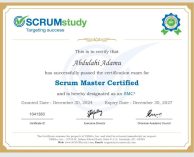
Scrum Master Certified (SMC®)

Scrum Master Certified (SMC®)

Enrol in Our Scrum Master Certified Training Programme

Build in-demand Scrum skills with hands-on training, expert coaching, and real-world insights. Enrol today to boost your career, improve team delivery, and gain recognised agile expertise. Kindly complete the form below to get started

    Scrum Master Certified (SMC®)

    Certification Prerequisites Target Audience Maintaining Certification (RCUs)
    Experience Education
    SMC® Nil Preferably SDC® certified professional (But not mandatory) Anyone who is interested in becoming a Scrum Master Take SMC® Recertification exam every 3 years or earn any SCRUMstudy Certification.

    Overview

    Scrum Master Certified (SMC®) professionals are facilitators who ensure that the Scrum Team is provided with an environment conducive to completing the project successfully. The Scrum Master guides, facilitates, and teaches Scrum practices to everyone involved in the project; clears impediments for the team; and ensures that Scrum processes are being followed.

    Successful candidates will be awarded the Scrum Master Certified (SMC®) certification by SCRUMstudy after passing the certification exam.

    Exam Format

    • Multiple choice
    • 100 questions per exam
    • No negative marks for wrong answers
    • 120 minutes duration
    • Proctored online exam
    • Current pass rate: 95%

    Audience Profile

    This certification is appropriate for anyone who is interested in becoming a Scrum Master.

    Prerequisites

    There is no formal prerequisite for this certification. However, it is preferable to complete the Scrum Fundamental Certified (SFC®) certification before applying for the Scrum Master certification.
    © SCRUMstudy.com. Includes content from the Scrum Body of Knowledge (SBOK®)

    Course Outline

    Introduction
    Course Objectives
    Course Methodology
    Certification Schema
    Exam Format

    Overview of Agile
    Agile Manifesto
    Agile Principles
    What has Changed
    Agile Methods

    Overview of Scrum
    Definition and brief history of Scrum
    Why Scrum
    Scrum vs. Traditional Project Management
    Benefits of Scrum

    Overview of A Guide to the Scrum Body of Knowledge (SBOK™️ Guide)
    Framework of the SBOK™️ Guide
    Who uses the SBOK™️ Guide
    How to use the SBOK™️ Guide
    Scrum Flow

    Scrum Phases and Processes
    Initiate
    Plan and Estimate
    Implement
    Review and Retrospect
    Release
    Scaling Scrum
    Scaling Scrum for Large Projects
    Scaling Scrum for the Enterprise

    Scrum Principles
    Empirical Process Control
    Self-organization
    Collaboration
    Value-based Prioritization
    Time-boxing
    Iterative Development

    Transition to Scrum
    Mapping Traditional Roles To Scrum
    Maintaining Stakeholder Involvement
    Importance Of Executive Support

    Scrum Aspects
    Organization
    Business Justification
    Quality
    Change
    Risk

    AI in Scrum